Water Treatment & ZLD
Home > Industries > Water Treatment & ZLD
A comprehensive approach to recycling water, reducing waste, and securing your environmental compliance.
Tank wash water and end-of-production effluents (chemical, cosmetic, pharmaceutical, etc.), ammonia solutions, pig slurry, dyehouse wastewater and radioactive effluents…
This specialty has positioned us at the forefront of ZLD (Zero Liquid Discharge) process implementation.
> A multi-sector expertise applied to a wide diversity of effluents.
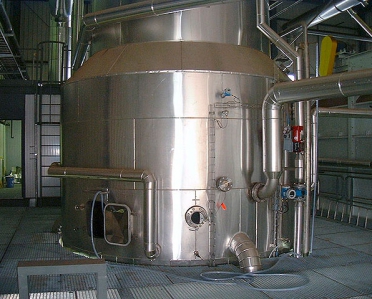
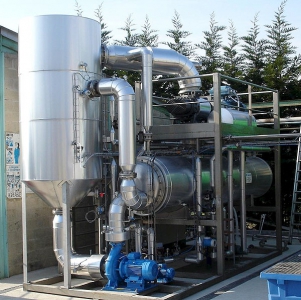
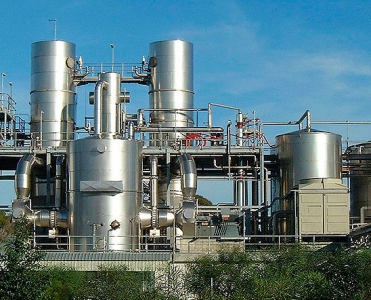
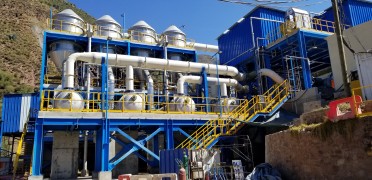
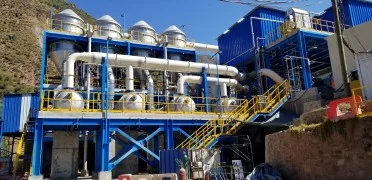
The installations designed by FE by France Évaporation meet the strictest regulatory thresholds and industrial targets in this field. They serve sectors including fossil and nuclear energy production, refinery effluents, chemical manufacturing, mining effluents, and landfill leachate treatment.

From your effluents to your resources. Without compromise.
In industry, every cubic meter of water used becomes a challenge: effluent management, treatment costs, dependence on natural resources, regulatory constraints…
We design advanced water treatment solutions based onevaporation, concentration and crystallization, enabling efficient separation of water from contaminants, reduction of waste volumes, and recovery of resources — even the most complex ones.> Less waste, less fresh water consumption, and total control over discharges.
Zero Liquid Discharge (ZLD) goes beyond industrial water treatment: it is a complete transformation of effluents.
![[FE web site] Water Treatment & ZLD diagram_concept](https://www.evaporation.com/wp-content/uploads/FE-website-Water-Treatment-ZLD-diagram_concept.png)
It is a holistic approach aimed at producing no liquid discharge: all water is recovered, treated, and reused, while residues are recovered or eliminated in solid form.
An approach designed to meet three major requirements:
Environmental
regulatory compliance & protection of natural ecosystems
Economic
reduction of costs related to fresh water supply and effluent disposal
Operational
production continuity, no impact on existing processes
Understanding ZLD: principles & challenges
Water recycling and reuse are now industrial priorities and key environmental policy objectives. In many industrial sectors, the goal is to achieve zero liquid discharge.
ZLD is built around three pillars:
Recycle up to 100% of water
ZLD aims for maximum recovery of water from industrial effluents, enabling its recycling and direct reuse within processes. This approach significantly reduces dependence on fresh water and secures supply under conditions of water stress.
It contributes to a more autonomous and sustainable production model.
Eliminate all liquid discharges
By eliminating liquid discharges to the natural environment, ZLD guarantees strict environmental compliance, even in the most demanding regulatory contexts.
This total control over effluents limits the risk of environmental impact and simplifies discharge permit management.
It fully aligns with industrial decarbonization and environmental responsibility strategies.
Convert residues into dry solid waste — easy to recover or dispose of
Concentrated effluents are transformed into dry residues that are easier to handle, transport, and store. These by-products can, depending on their nature, be recovered or disposed of under optimal cost and safety conditions.
This transformation converts a complex effluent into a controlled, potentially recoverable material.
At FE, ZLD systems are designed as integrated process solutions, combining evaporation, crystallization, and drying for complete effluent recovery.
> Goal: up to 100% water reuse and elimination of all liquid discharge, regardless of your industrial constraints.
Why implement a ZLD solution
Implementing a ZLD solution means regaining full control over the management of your industrial effluents.
By maximizing water recovery and reuse within the process, it significantly reduces fresh water requirements while securing operations against water stress and increasingly stringent regulatory demands.
A strategic lever in the face of today’s industrial challenges, ZLD directly addresses:
- the growing scarcity of water resources;
- the tightening of environmental regulations;
- the rising costs of treatment and disposal.
At the heart of the system, the combination of technologies such as evaporation, crystallization, and energy reintegration makes it possible to achieve one clear objective: zero liquid discharge.
Effluents are concentrated until they are transformed into dry solid residues, thereby optimizing material flows, reducing waste management costs, and sustainably improving the environmental and economic performance of your installations.
- WHAT?
- Zero liquid waste
- Full regulatory compliance
- WHY?
- Maximize water recovery
- Manage solids at process outlet
- WHO?
- All industry sectors
- Any industry generating significant volumes of wastewater
- WHERE?
- Water recycling facilities
- Waste treatment sites
- Worldwide, in water reuse or waste treatment contexts
- WHEN?
- At any stage of the industrial lifecycle
- New installations and retrofits on existing sites
> A flexible architecture enabling a wide range of configurations tailored to each process.
How it works: the process step by step
![[FE website] Water Treatment & ZLD diagram_zoom in](https://www.evaporation.com/wp-content/uploads/FE-website-Water-Treatment-ZLD-diagram_zoom-in.png)
A ZLD installation is based on the integration of complementary technologies in series, within a fully optimized multi-stage process designed to precisely match the nature and volume of the effluents treated.
Pre-treatment and reverse osmosis
Pre-concentration of the effluent separates an initial fraction of reusable water while beginning the concentration of pollutants.
Concentration (evaporation)
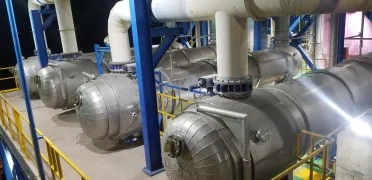
Liquid volume reduction is achieved through thermal evaporation, optimized by Mechanical Vapor Recompression (MVR) to minimize energy consumption.
Crystallization
Extraction of solid compounds converts concentrated effluents into salts and dry residues that are easy to recover or dispose of.
Drying (FE & SMS technologies)
Optionally, the residual sludge can be processed through a dryer (co-developed with SMS) to produce a final dry solid waste containing less than 5% residual moisture.
> Zero discharge. Zero loss. 100% control.
![[FE website] Water Treatment & ZLD diagram_key features](https://www.evaporation.com/wp-content/uploads/FE-website-Water-Treatment-ZLD-diagram_key-features.png)
> Water recovered at each stage is reintroduced into the production process or discharged into the natural environment in compliance with applicable standards.
Technical performance & energy savings
Developed by FE’s engineering teams, Mechanical Vapor Recompression (MVR) technology — at the core of our ZLD installations — recycles the steam energy produced during evaporation, drastically reducing external steam and primary energy requirements.
CO₂ emissions associated with the evaporation process are thus reduced to zero.
In addition, FE has co-developed with SMS an integrated drying solution combining an SMS dryer and an FE MVR system, enabling treatment of residual sludge from crystallization to produce a dry solid waste with less than 5% residual liquid — opening the path to recovery or disposal through appropriate channels.
> Maximum adaptability
Every FE installation is custom-designed, with no imposed standard configuration. Our teams study your effluents, site constraints, regulatory objectives, and energy requirements to propose a solution consistent with your existing setup.
The FE ZLD system is compatible with any equipment or process already in place.
> Integration without production interruption & scalability to evolving site requirements.
Key metrics illustrated
Indicator | Value |
|---|---|
Final waste volume reduction | 5 to 20× |
Electrical consumption | 20 to 60 kWh/t |
CO₂ emissions | 0% (combustion-free process) |
Water recovery | up to 100% |
Impact on production | none (non-intrusive system) |
The difference FE
HOLISTIC APPROACH
An integrated approach combining multiple complementary solutions in series.
ENERGY EFFICIENCY
Systems optimized to sustainably reduce energy consumption and operating costs.
DRYER + MVR
A system co-developed with SMS through to solid recovery.
ADAPTABILITY
Every configuration is custom-engineered based on the actual composition of your effluents.
RESOURCE RECOVERY
Your effluents become resources through by-product recovery.
MULTI-SECTOR APPLICATION
Proven expertise on the most complex effluents, across multiple industrial sectors.